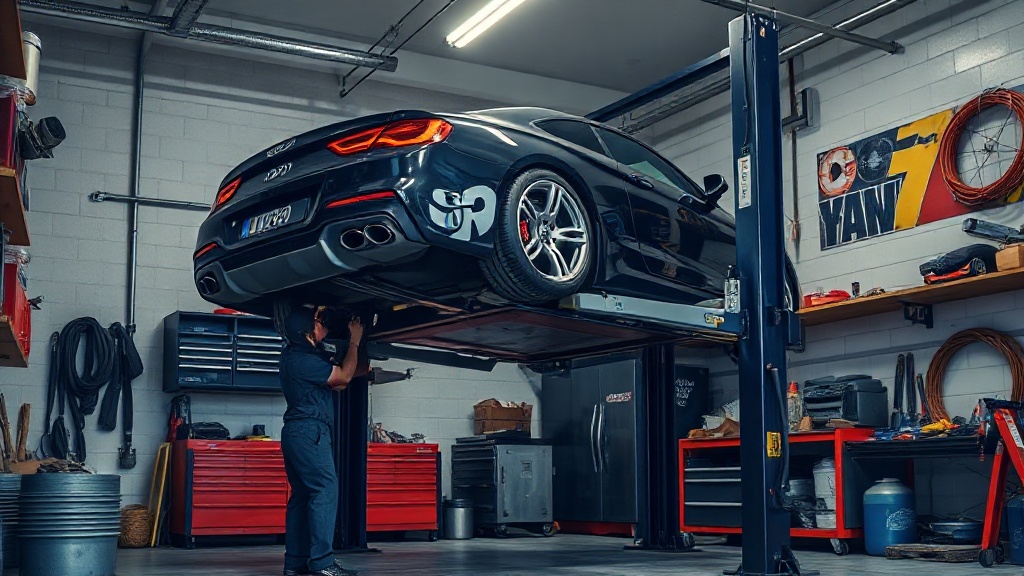
Running a performance or tuner shop is nothing like running a quick-lube. You take in cars worth more than your building, you flash ECUs that change how an engine behaves at full throttle, you build motors that make double their factory power, and you sell parts that customers bolt onto vehicles you may never see again. Every one of those activities creates a distinct liability, and a generic "auto shop" policy bought off a website rarely accounts for all of them.
This guide walks through every coverage a speed shop, dyno and ECU tuning shop, custom/modification garage, or performance parts retailer should have on the table — what it does, why it matters, and what drives the price.
The Core Coverages Every Tuner Shop Needs
Garage Liability
Garage liability is the foundation policy for any business that works on customer vehicles. It combines premises liability (someone slips in your lobby) with operations liability (you cause bodily injury or property damage while servicing a car). If a customer trips over an air hose, or a car rolls off a lift and damages a neighboring vehicle, this is the coverage that responds. For most shops, garage liability replaces a standard general liability form because it is built around automobile operations.
General Liability
If you run a parts retail counter, host customers in a showroom, or sell merchandise alongside your service work, a commercial general liability (CGL) policy covers third-party bodily injury and property damage that is not tied directly to vehicle servicing. Many shops carry both garage liability and CGL, or a package that blends them, so there are no gaps between "premises" and "garage operations."
Garagekeepers Coverage
This is the one shops most often get wrong. Garage liability does not pay for damage to a customer's car while it is in your care. Garagekeepers coverage is specifically for the vehicles you take custody of — on the lift, on a test drive, parked in your lot overnight, or sitting on the dyno. For a tuner shop handling modified and high-value cars, this is non-negotiable, and the limit needs to reflect the most expensive vehicle you ever have on site.
Products & Completed Operations
When a part you sold or installed, or a tune you wrote, contributes to an engine failure or a crash after the car leaves your shop, products and completed-operations liability is what defends you. This exposure is enormous for tuners because the entire point of the work is to push components past factory limits. Make sure this coverage is included and not quietly excluded.
Commercial Property & Equipment
Your dyno, lifts, scan tools, welders, tire machine, inventory, and the building itself represent serious capital. Commercial property coverage protects against fire, theft, vandalism, and many weather events. Be sure to schedule high-value items like a chassis dyno separately and insure inventory at replacement cost — performance parts are expensive and hard to source quickly.
Commercial Auto
Shop trucks, parts runners, a trailer, and especially any customer car driven on the public road for testing all create auto liability. Personal auto policies exclude business use and will deny a claim involving a customer's vehicle. Commercial auto fills that gap, and many garage policies extend coverage to test drives under specific conditions — confirm yours does.
Workers' Compensation
If you employ technicians, fabricators, or counter staff, almost every state requires workers' comp. Shop work carries real injury risk: lifts, presses, grinders, hot exhaust, and chemicals. Workers' comp pays medical bills and lost wages for on-the-job injuries and protects you from employee injury lawsuits.
What Drives Your Premium
Insurers price tuner shops on the specific mix of risk you bring. The biggest cost drivers include:
- Type of work performed — dyno tuning and engine building rate higher than basic bolt-on installs
- Annual revenue and payroll — larger operations carry larger exposures
- Value of customer vehicles — handling six-figure builds raises garagekeepers limits and premium
- Test driving practices — frequent road testing of modified cars increases auto exposure
- Loss history — prior claims, especially completed-operations claims, push rates up
- Building and equipment value — more property to insure means more property premium
- Number of employees and their roles — fabrication and machining payroll rates higher than office staff
Certificates of Insurance for Landlords and Vendors
If you lease your building, your landlord will require a certificate of insurance (COI) naming them as an additional insured. Parts distributors, manufacturers whose products you're an authorized installer for, and event venues you work with often require the same. A good policy lets you issue COIs quickly, which matters when a vendor relationship or a lease signing is waiting on proof of coverage. Keep your agent's contact handy so certificate requests don't stall a deal.
Putting It Together
No two performance shops are identical, which is exactly why a packaged "business auto shop" quote so often leaves dangerous gaps. The right program layers garage liability, garagekeepers, products and completed operations, property, commercial auto, and workers' comp into a single coordinated structure with limits that match the cars you actually handle and the work you actually do.
Tuner Car Insurance, a brand of Contractors Choice Agency, builds these programs specifically for the performance aftermarket and is licensed in all 50 states. Call 844-967-5247 or request a quote through our online form, and we'll put together coverage that fits the way your shop really runs.