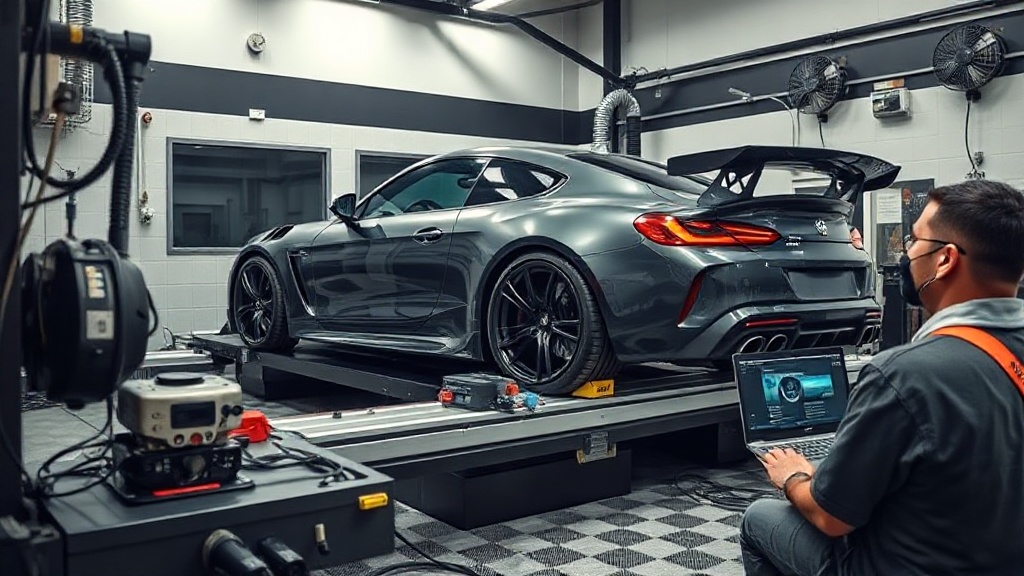
The moment a customer hands you the keys to a built Supra, a widebody GT-R, or a numbers-matching muscle car, you've taken on a liability that most shop owners underestimate. That car might be worth $40,000 — or $400,000 — and while it sits on your lift, rides on your dyno, gets driven on a test loop, or parks in your lot overnight, you are responsible for it. If it's damaged, stolen, or burns in a shop fire, the customer expects you to make it right. The coverage that backs that promise is garagekeepers insurance, and it is one of the most important policies a tuner shop can carry.
Why Your General Liability Won't Pay
This is the single biggest misunderstanding in the industry. Both general liability and garage liability contain a care, custody, and control exclusion. That means damage to property in your care — including a customer's vehicle — is specifically excluded from those policies. Your GL will defend you if a customer slips in your lobby, but it will not pay a dime when a car you're servicing gets wrecked, dropped, or stolen.
That gap exists by design. Insurers separate the risk of harming the public from the risk of harming the specific property you're entrusted with, because the second one is far more frequent and predictable in an auto shop. Garagekeepers is the policy built to fill it.
The Care, Custody, and Control Exposure
For a performance shop, the care/custody/control exposure shows up in more places than owners realize:
- On the lift or in the bay — a lift failure, a slip with a tool, a fire from welding near fuel lines
- On the dyno — an engine that lets go at full load, a fire, a runaway during a pull
- On a test drive — a collision while you're road-testing a tune or shakedown-driving a fresh build
- In storage — cars parked in your lot or stored overnight while waiting for parts
- Theft and vandalism — a break-in that targets the high-value cars you're known to keep
- Weather and fire — hail, flooding, or a structure fire that takes out everything inside
Every one of those scenarios is a customer's vehicle being damaged while in your control — and every one is covered by garagekeepers, not by your liability policy.
Direct Primary vs. Legal Liability Forms
Garagekeepers comes in two flavors, and the difference matters a great deal to your customers.
Legal Liability Form
This is the cheaper version. It only pays for damage to a customer's vehicle if you are legally at fault. If a car is damaged by something you didn't cause — a storm, a fire that started next door, a theft despite reasonable security — the legal liability form may deny the claim, leaving the customer to chase their own insurer. That creates angry customers and reputation damage even when you did nothing wrong.
Direct Primary (Direct Coverage) Form
This version pays for covered damage to a customer's vehicle regardless of fault, up to your limit. If a car in your care is damaged — even by an act of nature or an unprovable theft — direct primary responds. For a shop that wants to protect customer relationships and stand behind every car that comes through the door, direct primary is almost always worth the higher premium.
Setting the Right Limit
Here is the rule that protects you: your garagekeepers limit should equal or exceed the value of the most expensive vehicle you ever have on site at one time — and ideally the total value of everything in your care during a busy period.
Shops get burned when they buy a $50,000 limit and then take in a $150,000 build for a dyno session. If that car is damaged, the policy pays $50,000 and you personally owe the remaining $100,000. Walk through the high end of what you handle:
- The single most valuable car you've ever worked on
- How many high-value cars are in the building during peak weeks
- Whether you store completed builds overnight before delivery
- Whether you take cars to off-site events or track days
If you regularly handle six-figure vehicles, your limit needs to reflect that. It's far cheaper to raise a limit than to write a check for the difference.
Documentation That Protects You
Strong intake practices make garagekeepers claims smoother and reduce disputes:
- Photograph every vehicle at check-in — document existing damage before you touch it
- Use a written work authorization that records the vehicle's condition and stated value
- Limit who can drive customer cars and log every test drive
- Control access to the area where high-value vehicles are kept
The Bottom Line
If you take custody of customer cars — and every speed shop, tuning shop, and custom garage does — garagekeepers is not optional. It's the coverage that lets you take in a client's pride and joy without betting your own net worth on nothing going wrong.
Tuner Car Insurance, a brand of Contractors Choice Agency, writes garagekeepers coverage tuned to the high-value cars performance shops actually handle, and we're licensed in all 50 states. Call 844-967-5247 or request a quote through our online form to get the right form and the right limit in place.